Buying a new ERP system is a major decision that will affect your business for many years. If you’ve done your research, you’ve probably found conflicting information. For many businesses, the decision can come down to Oracle NetSuite and Acumatica.
Key comparisons include: Backgrounds, Features, Implementation, Cost Structure, Usability, and more.
Founded in 1998 and going public in 2007, NetSuite was later acquired by Oracle in 2016. Initially developed before the standardization of many current web technologies, Oracle NetSuite faces limitations in deployment options, customization language, and database export functionalities.
Acumatica, founded in 2008, was built from the ground up with the latest web technology, ensuring accessibility via both cloud and on-premises setups. It provides anytime data access, flexible licensing models, and allows for user addition without extra charges, effectively reducing your company’s Total Cost of Ownership (TCO).
We’ll dive deeper into a comparison of both systems, looking at the specifics of what each offers, how they handle different business needs, and their overall impact on your operations. This detailed look will help you understand the unique advantages and limitations of Oracle NetSuite and Acumatica, enabling you to make an informed decision tailored to your company’s needs.
Acumatica vs NetSuite Feature Comparison
Functionality
NetSuite
Acumatica
True cloud* (built for cloud)
True mobility (supports all devices with no special apps)
Full function ERP
Full relational database export
Customization using industry standard tools
Upgrade on your schedule
Multiple deployment options
Scale as you grow
Superior Return on Investment (ROI)
Implementation Comparison
NetSuite Implementation ERP vendors, like NetSuite, often emphasize low pricing as their main selling point, including substantial discounts on software licenses and implementation services, sometimes offering implementation at no cost. However, NetSuite’s “SuiteSuccess” methodology, which promises rapid deployment using a predefined scope that limits customization and excludes data migration, introduces significant risks to the implementation process.
This can lead to situations where the installation fails to meet the company’s needs, requiring extensions or even rescue efforts by third parties. Such high-stakes implementations have both personal and professional risks, including the potential for job loss for those who make the purchasing decisions.
Acumatica Cloud ERP Implementation Acumatica is designed with a customer-centric approach to ERP implementation, starting with a detailed “discovery phase” to align with each customer’s specific needs and priorities, ensuring there are no surprises when going live. Acumatica offers both a traditional implementation process and a “FastTrack Deployment” for quicker, fixed-cost setups, without skipping essential planning and customization steps.
Acumatica focuses on adapting its software to fit unique business processes, providing a competitive edge, rather than enforcing a one-size-fits-all solution. This flexible methodology results in a noticeable lack of search results for failed Acumatica implementations, unlike NetSuite.
NetSuite Cost Structure NetSuite licensing can surprise users with its cost, as it charges per user, including part-time and seasonal workers, and may add fees based on transaction volumes. At renewal, customers often face price increases potentially over 50% of the initial contract, with renewals set at current list prices, not the initial discounted rate. Reducing licenses doesn’t always lower costs. Customers are advised to secure the best initial discount, but longer contracts lock you in, potentially increasing the total cost of ownership.
Acumatica Cloud ERP Cost Structure Acumatica aims for a predictable financial benefit with its customer-first policies, like the Customer Bill of Rights that guards against unfair price hikes. Its user-friendly licensing and consumption-based pricing mean everyone, including external partners, can use the software, encouraging collaboration and operational excellence. More usage even leads to lower costs, creating a beneficial situation for all customers.
Usability Comparison
NetSuite Usability NetSuite’s user experience is often criticized for being unintuitive, with complex navigation and screens, making it difficult to use and requiring a significant learning curve. Users find its standard reports lacking and report customization challenging, needing technical skills.
Performance issues and several major system outages have further impacted its reliability. Customizations in NetSuite, requiring proprietary “SuiteScript,” can be costly due to the need for specialized training, unlike Acumatica’s use of the more common .NET framework. Additionally, the slow rollout of new features in NetSuite frustrates users waiting for critical updates, affecting overall satisfaction with the system.
Acumatica Cloud ERP Usability The ease of use of an ERP system is crucial for user adoption, training, retention, and productivity. Acumatica’s consumption-based model, offering unlimited user access, promotes collaboration and streamlines processes, enhancing company efficiency. Its user-friendly design allows for easy customization of workflows, dashboards, and reports, encouraging active user engagement.
Integration with tools like Adobe PDF and Microsoft Teams further enhances its practicality. Acumatica’s flexibility and ongoing updates, driven by significant research and development efforts, ensure it remains adaptable to evolving business needs, maintaining a competitive edge without the need for extensive developer involvement.
Why are People Choosing Acumatica over NetSuite?
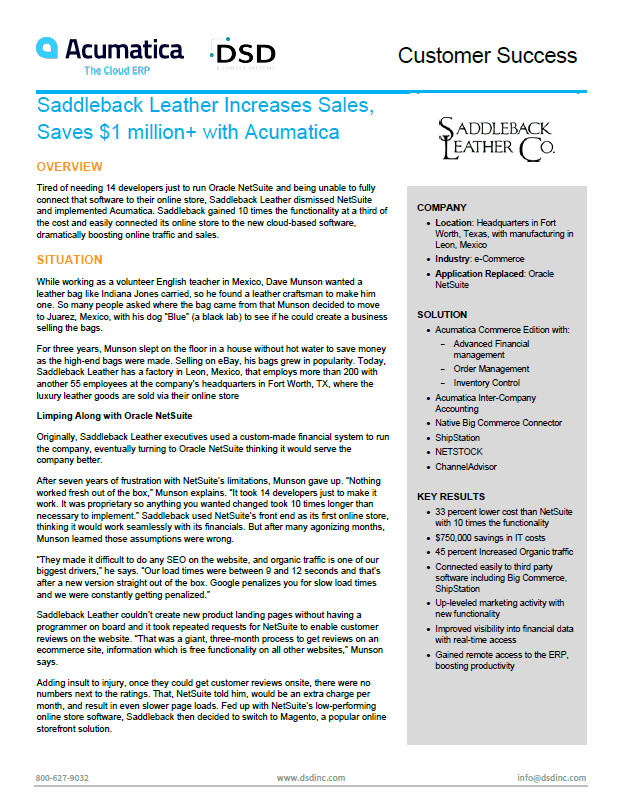
Saddleback Leather Increases Sales, Saves $1 million+ with Acumatica
After years of frustration with Oracle NetSuite’s limitations and performance issues, including a cumbersome online store and challenges with SEO, Saddleback Leather had finally had enough.
Acumatica’s user friendly, connected platform allows Saddleback Leather to capture increased online sales at a lower operating cost, making the company more profitable. Most importantly, Dave Munson can increase his focus on his personal mission of improving lives and providing opportunities globally.
"Prior to Acumatica, our IT developer kept saying we should wait until the next upgrade and things would get better...but it was always a downgrade with NetSuite."
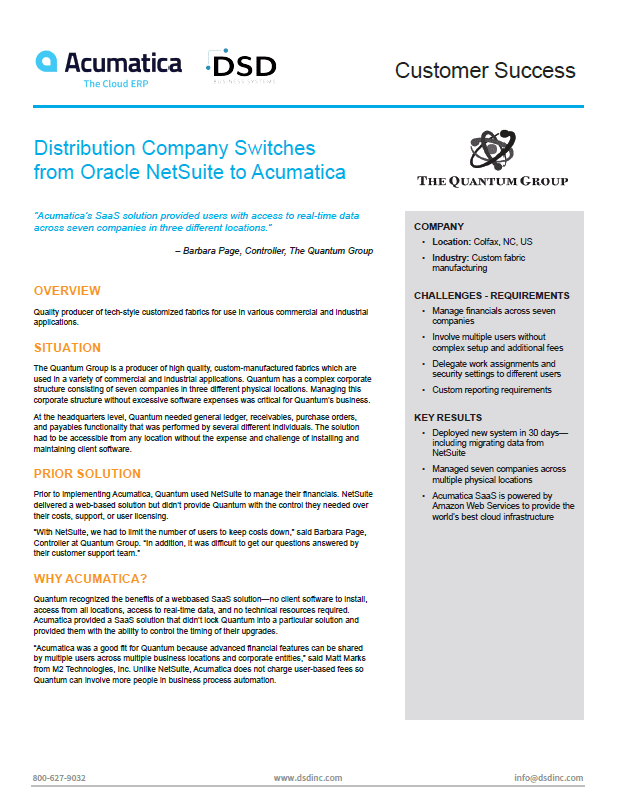
Distribution Company Switches from Oracle NetSuite to Acumatica
Quantum Group faced challenges with NetSuite, unable to manage financials across seven companies in three locations, involve multiple users, delegate user-specific work assignments and security settings, or utilize custom reporting.
Using Acumatica, Quantum Group can automate its operation by quickly adding users to its business processes without installing client software or paying additional license fees. All users access real-time data, features, and reports from anywhere they are located. Acumatica Cloud ERP gave Quantum the control they needed at a price they could afford.
"Before we had Acumatica, when we had Oracle NetSuite, we had to limit the number of users to keep costs down. In addition, it was difficult to get our questions answered by their customer support team. Not so with Acumatica."
Acumatica Cloud ERP delivers adaptable cloud and mobile technology with a unique unlimited user licensing model allowing a complete, real-time view of the business anywhere, any time from any web browser. Acumatica is the complete cloud ERP solution for all your needs today and in the future.