




















Paving a Path to Digital Transformation for Your Business


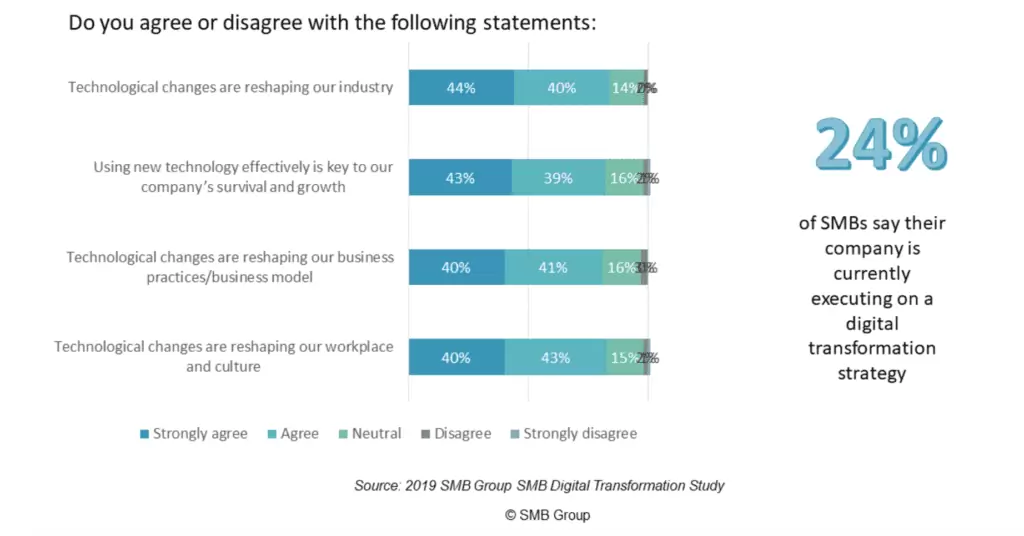
Did you know that more than 80% of small and medium business decision-makers agree or strongly agree that digital technology is impacting their businesses and industries? (SMB Group, 2019). However, we know that making the transition is not as easy as it seems: only 24% of SMBs are currently executing on a digital transformation strategy.
SMB Attitudes About Technology
Is it time for your business to go digital?
If your business is depending on aged out, entry-level software and spreadsheets to run your business, it is time to reconsider if your technology is slowing your businesses ability to grow.
We have identified some red flags that best indicate if it is time to make the switch to a newer technological solution:
Creating and sharing reports is tedious, inefficient, and error-prone
It’s hard to get the information you need, when you need it. Maybe it takes too long to create or customize reports for things like billing, payments, budget rollups or sales forecasts because people have to re-enter and reconcile information from different systems and spreadsheets—which also increases the risk of errors.
You lack the visibility you need to make the best decisions
When businesses depend on a mix of different data sources, spreadsheets and reports, you can’t see how the different aspects of your business work together. It’s likely that different people will have very different views of what’s happening in the business, and find it difficult to reach consensus on key decisions. For instance, if you’re a services company, you may have billing inefficiencies that you can’t readily see that lead to missing hours and expenses. Or you can’t see why things aren’t working, such as why the tried-and-true promotions that used to work no longer do.
Existing solutions don’t support expansion and growth
You need software that molds to your expanding needs, your softwares inability to grow with you is a key indicator of needing a change. Growth opportunities come and go quickly, you need to be able to act on them before you miss out. For example, if you have an opportunity to do business in another country, you’ll need to be able to track exchange rates, convert currencies and consolidate financials. Or if you want to offer a new subscription service, or create a new channel, you’ll need to be able to support new financial, tax and logistics requirements.
The technology you use feels old
Do employees complain about the software they’re using? People have come to expect that they can do very sophisticated things very easily with consumer apps—and increasingly expect that business apps will deliver the same type of user experience, both on traditional desktops and mobile devices. Can your business afford to frustrate employees—and turn off prospective hires—with dated applications and spreadsheets that don’t work well together?
Find a digital solution that suits your business goals
Six Steps to Get Started on the Digital Transformation Path:
Technology is certainly essential to digital transformation. But digital transformation encompasses much more than technology—it requires a shift in how you think about, manage and operate the business. Business strategy should be at the core of digital transformation strategy—the right technology solutions help to enable it.
We have created initial steps for you to follow so your business can successfully start on the path towards digitally transform:
1. Start with the bigger picture in mind and prioritize specific goals
Take a fresh look at what’s happening in the business environment. What’s changing in your business, with competitors, and with customers? Maybe revenues and profits are stagnant, or you’re finding it tough to recruit and retain employees. Perhaps a competitor has introduced a new business model or product that it is negatively impacting your company. Or you want to enter a new market, but you’d have to put so many workarounds in place to facilitate the move that you’re stalling. Zeroing in on specific issues and problem areas can help you set goals to sustain and grow in your market.
2. Communication is key
Get input early and often from relevant stakeholders so that you’re not missing a key piece of the puzzle. Executive buy-in is critical, but it’s also crucial to involve employees who will need to adapt to new business practices and technology solutions. Remember to get feedback from your customers and partners too. Find out what they think you’re doing right, where improvement is needed, how their expectations are changing, and how you can better serve them.
3. Evaluate your technological needs
Will the technology solutions you use today help you achieve your business goals, or will they hold you back? Look for solutions that automate repetitive processes and readily provide you the information and analysis tools you need to make better decisions. Consult with trusted technology advisors who can provide clarity about how different solutions will help you meet your business objectives, and supply realistic details about the resources, costs and timeframes that deploying a new solution will require.
Business Applications Trajectory to the Cloud
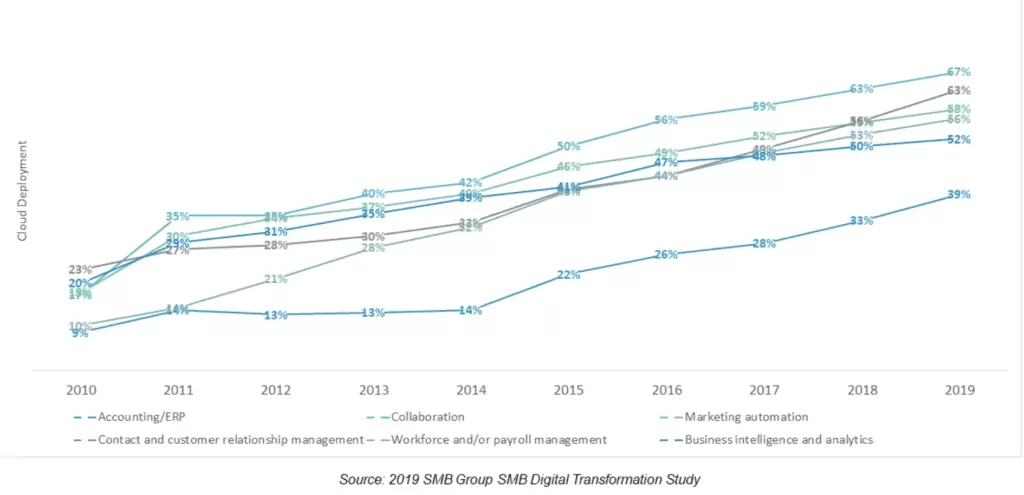
It’s no wonder that SMB adoption of cloud-based, software-as-a-service (SaaS) solutions has risen steadily over the years. Cloud providers offload SMBs from having to own, deploy and manage infrastructure and applications—enabling businesses to get up, running and productive with new solutions more quickly than comparable on-premises alternatives. As important, modern cloud solutions are built on open, flexible platforms, and provide real-time, consistent information. Cloud providers are also embedding new technologies, such as artificial intelligence, machine learning, internet of things (IoT) and more into their solutions. This means that customers can access these new capabilities within the applications they already use, instead of having to evaluate, purchase and integrate them on their own.
5. Seek guidance through example and recommendation:
Connect with people through industry associations and communities, and ask technology vendors for customer references you can talk with. Find out how they set goals, selected solutions, what they did right and any pitfalls they’ve encountered.
6. Look to your priorities and goals for guidance
While it’s important to set priorities—whether to improve employee experience, streamline financials and planning or personalize the customer experience, you don’t want to end up with a more modern—but still disjointed—set of siloed solutions. Select technology solutions from vendors who build their systems with open, flexible technologies so that you can add new capabilities as you need to in an incremental, yet integrated manner. Aim to integrate workflows and create a more unified view of data from different areas of the company. This will not only help to streamline business processes, but to more easily see what’s going on in the business, and how what happens in one area can affect another.