




















Breaking Down ERP Software Acronyms

November 22, 2016
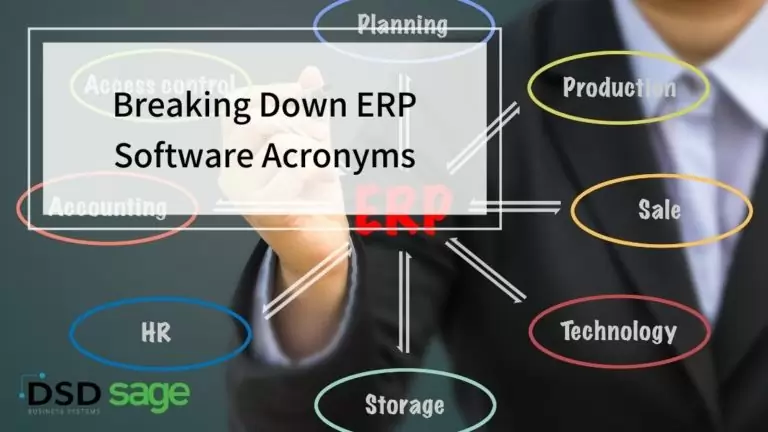
Financial professionals in the business world are inundated with new industry information on a regular basis. Keeping track of each new technology or breakthroughs and analyzing how it affects a company can be stressful. Growing businesses thrive when employees are agile, flexible, and up to date with the latest information. When it comes to assessing different types of accounting software, there are many abbreviations used within the industry and you might be wondering wondering what all of these abbreviations mean. We’ve compiled this short list of acronyms you’ll likely encounter and what they mean for your business. After reading, you should know what to look for when it comes to upgrading your company’s financial software.
ERP: Enterprise Resource Planning
ERP stands for Enterprise Resource Planning. Most small businesses begin by using Microsoft Excel spreadsheets to manage company information, payroll, expenses, inventory, and other aspects of the business. However, unless the company remains a small operation, you’re likely going to need to upgrade to a more robust accounting software system. ERP software, such as Sage ERP or Acumatica ERP, functions as a catchall for all your company’s financial bookkeeping, data storage, and financial planning.
When companies switch to ERP software, they can automate a great deal of the data entry that plagues many financial officers of burgeoning companies. In the early days of a business, it may not be a big deal to spend a few hours each day compiling data and checking figures, but as you grow, these mundane tasks become toilsome and detract from your ability to contribute to your company’s growth. Today’s financial professionals are far more than numbers crunchers; they’re vital influencers of business decisions. ERP software helps to have more control over an organization’s finances while simultaneously freeing up time.
CRM: Customer Relationship Management
CRM stands for Customer Relationship Management. CRM involves the practices that a company uses to manage customer information and data, along with mapping an analyzing that customer information. When starting a business, networking is crucial to success. Not only is it necessary to build a list of customers, but it’s also vital to make connections with potential suppliers, distributors, and partners. A growing company is going to see these lists increase, and it can quickly become troublesome to follow these company contacts in your email or Microsoft Excel.
Customer relationship management software helps to keep tabs on the people you interact with on a daily basis by creating profiles for their relationships and past interactions with your company. It doesn’t send a professional message to deliver initial greeting salutations repeatedly after doing business with someone for a while, so you want to guarantee that you’re showing customers that you remember them—as well as what they do for your company and what kind of relationship you have with them.
One great thing about the Acumatica ERP suite is that you can also install an add-in Microsoft Outlook that allows you to see a customer profile directly from your email or the Acumatica platform. This way, you can forward emails to the correct recipient, see a customer’s full history of past interactions, and make crucial business decisions based on real-time information.
API: Application Programming Interface
API describes a set of tools used to build applications. This technology lets users manage interactions between and among connected devices. One simple example of this implementation is when Facebook shares a user’s Spotify playlist. Though for smaller industries, the use will likely be more practical.
Essentially, building an interface is more customizable and intuitive when all the pieces are ready for customized uses. When it comes to Acumatica and other types of accounting software, API – application programming interface – means you can tailor the interface to suit your exact needs instead of wading through a bunch of useless bloatware or features that do not benefit your company.
The API structure of an accounting platform means an ERP suite you can customize to suit your company. Every organization has unique needs and forecasting requirements, and well-designed API means you can create accurate, detailed financial reports and forecasts while tracking your customer data.