

















Power Posing: Trick Your Body Into Success

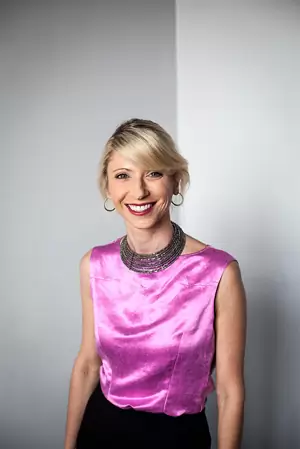
“Amy Cuddy – PopTech 2012 – Camden Maine USA” by Thatcher Cook for PopTech, used under CC BY-SA 2.0
Everyone wants to be successful, but not everyone feels like they have what it takes. Amy Cuddy, social psychologist and Harvard Business School professor is spreading the word that we all have more of what it takes than we think. She’s modified the saying, “Fake it ‘til you make it” to “Fake it ‘til you become it,” and proven that there’s science to back up these words of wisdom.
Cuddy’s research taught her that, in the animal kingdom, leaders take up more space, physically. And she wondered, do they stand tall, with arms spread wide, because they’re in charge? Or are they in charge because they stand tall with arms spread wide? Turns out, it goes both ways. And it applies to humans, too.
Along with Dana Carney, a professor at UC Berkeley, Cuddy conducted a study to examine how your body language affects not how others perceive you, but how you perceive yourself. Their hypothesis was that by pretending to be powerful – by adopting a body position associated with power – people would feel more powerful, and, as a result, act more powerful. Their study proved them to be right.
These positions associated with power, dubbed “power poses” by Cuddy, include: sitting with your feet up on the desk, hands behind your head, elbows out; standing with your feet slightly more than shoulder width apart, hands apart, leaning on a desk; and standing, hands on hips, Wonder-Woman style. In the study, participants were asked to hold one of these high-power poses for two minutes and then given two dollars and asked to gamble on a roll of the dice. Other participants were asked to hold low-power poses – hunched over with limbs together – for two minutes and then gamble. Of those who adopted high-power poses, 86 percent elected to gamble, versus only 60 percent of those in low-power poses. Those who’d struck high-power poses, for just two minutes, felt – and acted – more powerful.
Even more interesting, the researchers also took and tested saliva samples from the two groups and found that high-power posers experienced a 19 percent increase in testosterone while low-power posers experienced a 10 percent drop in testosterone. And Cortisol, the primary hormone released in response to stress, went up for low-power posers and down for high-power posers. Turns out, your body language doesn’t just talk to other people, it talks to your body.
 In a second experiment, after participants assumed the poses, they were given a stressful five-minute job interview. Trained evaluators – who had no idea what the study was about, and hadn’t seen the participants posing – gave higher marks to the performance of those who had adopted high-power poses. Cuddy calls power posing a “free no-tech life hack” and, in her TED Talk, talks about how she really believes it can change meaningful life outcomes. “Our bodies change our minds, and our minds can change our behavior, and our behavior can change our outcomes.” So before you enter your next stressful situation, consider spending two minutes somewhere private doing a power pose. Let your body help you get where you want to go.

Written by DSD Business Systems